The surroundings
Béthune and its surroundings.
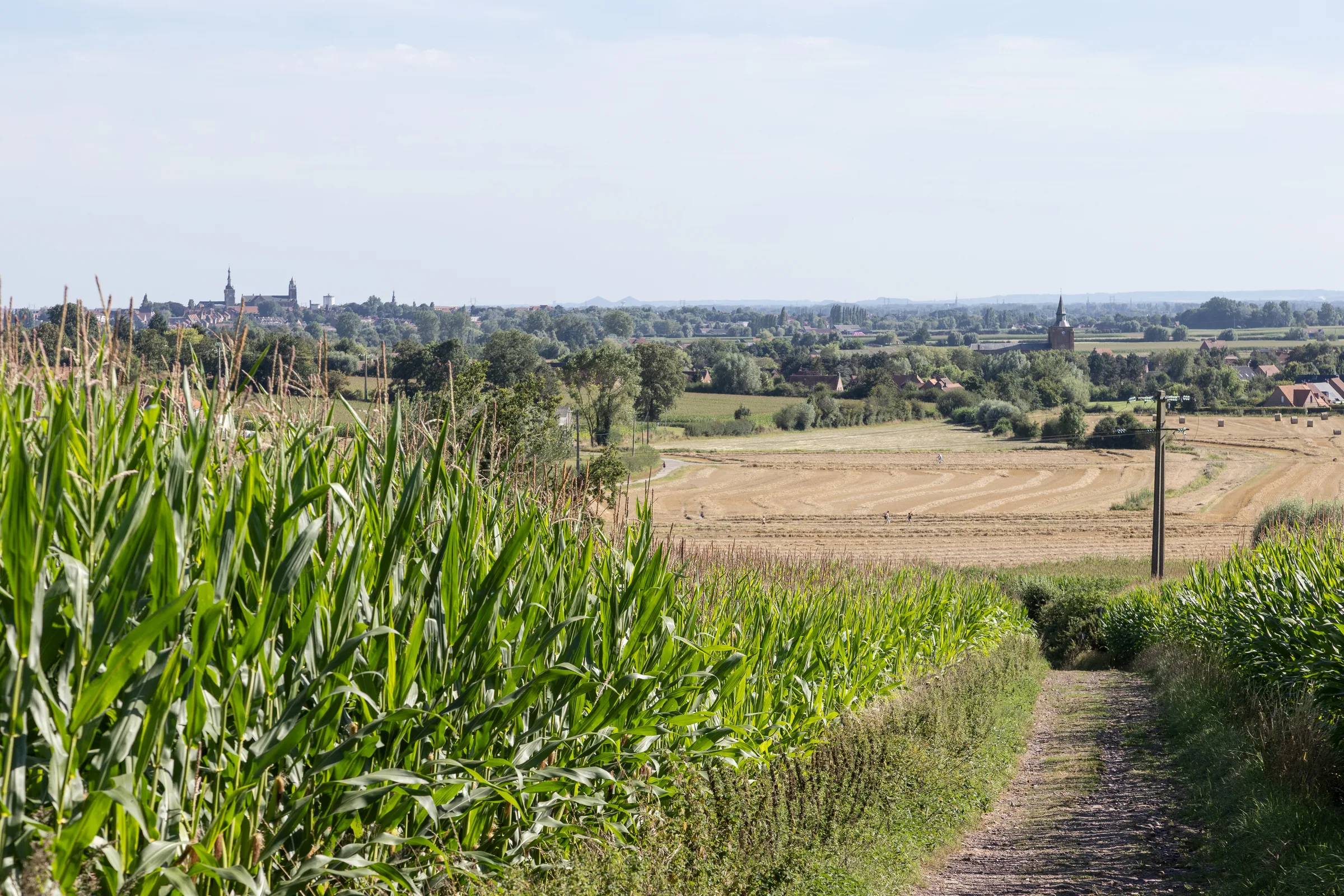
The Loft is a two-minute walk from the station. From there, the Hauts-de-France open in every direction.
By direct train: Arras in 30 minutes, Lille in 30 minutes, Saint-Omer in 42 minutes, Dunkirk in one hour. By car: Bergues in fifty-five minutes, inland Flanders in an hour, Bruges in an hour and a half. A day is enough for most of these destinations — go, visit, and be back at the Loft in the evening.
The region is rarely known as a whole. UNESCO-listed belfries, first-rank museums, First World War remembrance sites, the Channel coast, marshes, wild beaches: the contrasts are real, and the distances short.
Distances and times
The destinations at a glance.
| Destination | Distance | By car | By train from Béthune |
|---|---|---|---|
| Béthune centre | — | on foot | — |
| Lens / Louvre-Lens | 18 km | 20 min | 🚆 14 min (direct train) |
| Arras | 28 km | 30 min | 🚆 ~30 min (direct train) |
| Saint-Omer | 35 km | 35 min | 🚆 42 min (direct train) |
| Lille | 40 km | 40 min | 🚆 30 min (direct train) |
| Dunkirk | 65 km | 55 min | 🚆 1h (direct train) |
| Calais | 70 km | ~50 min | 🚗 Car recommended |
| Opal Coast / Deux Caps | 85 km | ~1h | 🚗 Car recommended |
| Bruges (Belgium) | 135 km | ~1h30 | Via Lille (connection) |
Béthune
On foot from the Loft.
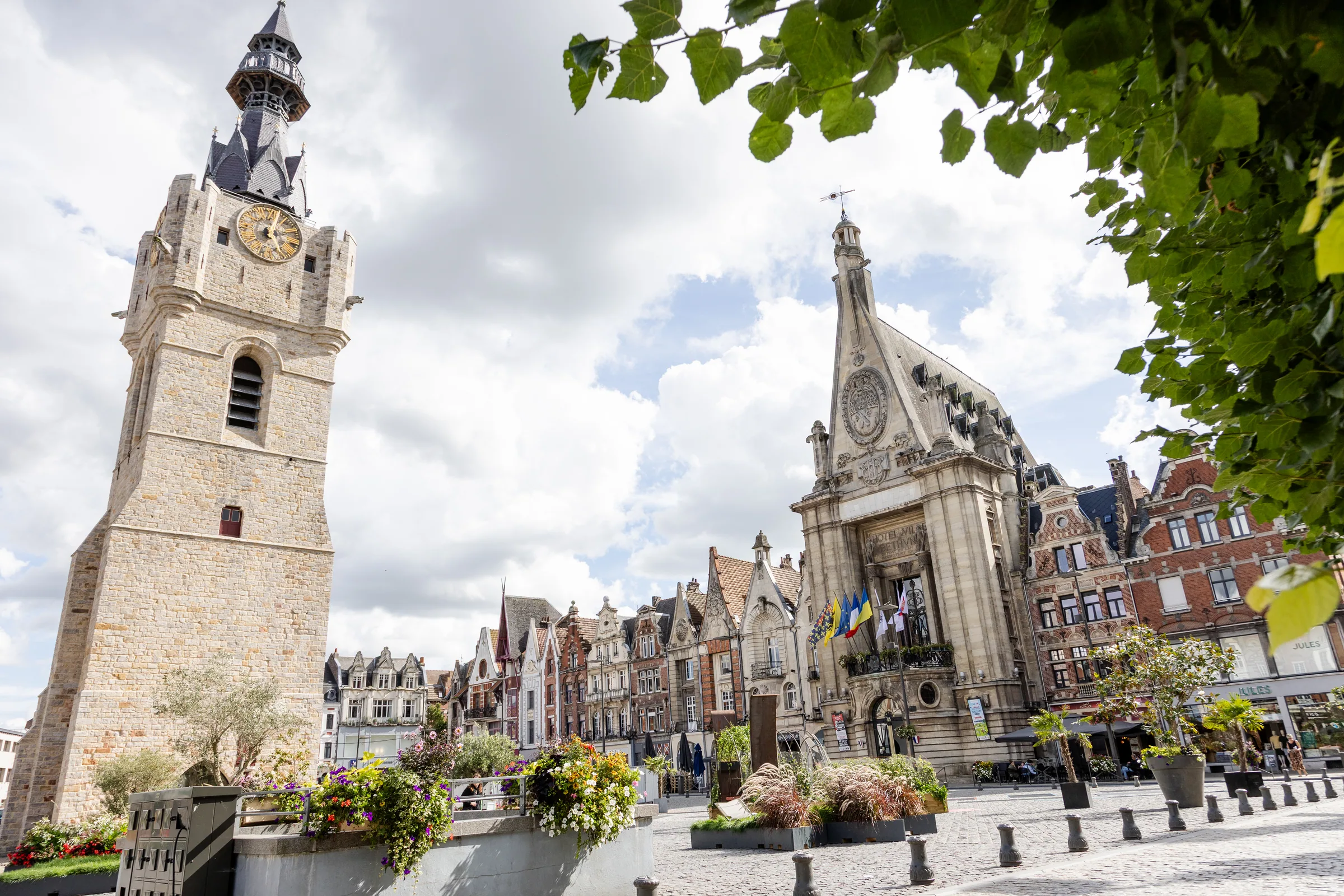
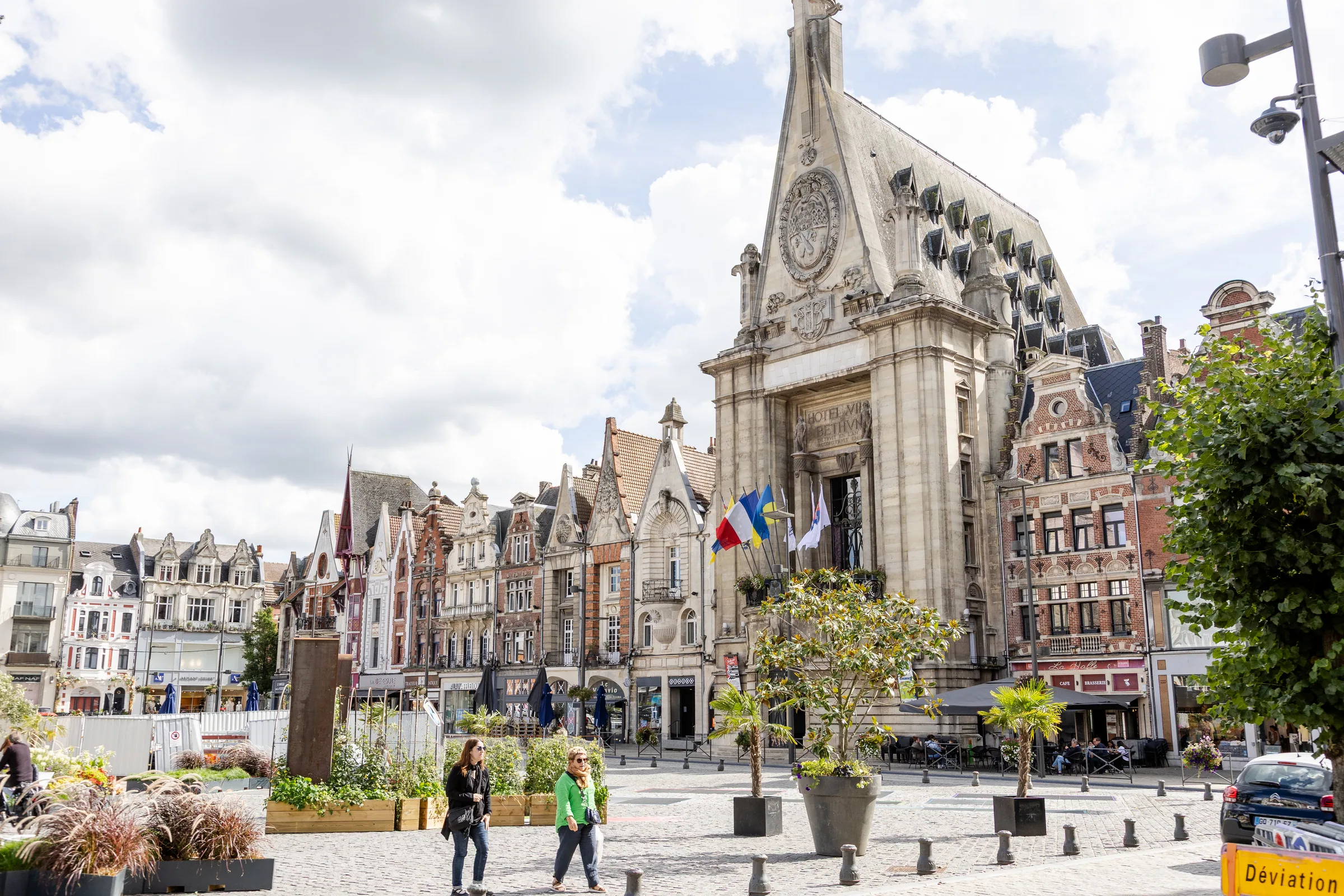
The Grand Place is less than a kilometre away. The 14th-century belfry, a UNESCO World Heritage site, overlooks the square — you can climb its steps for a 360° panorama over the rooftops and the countryside.
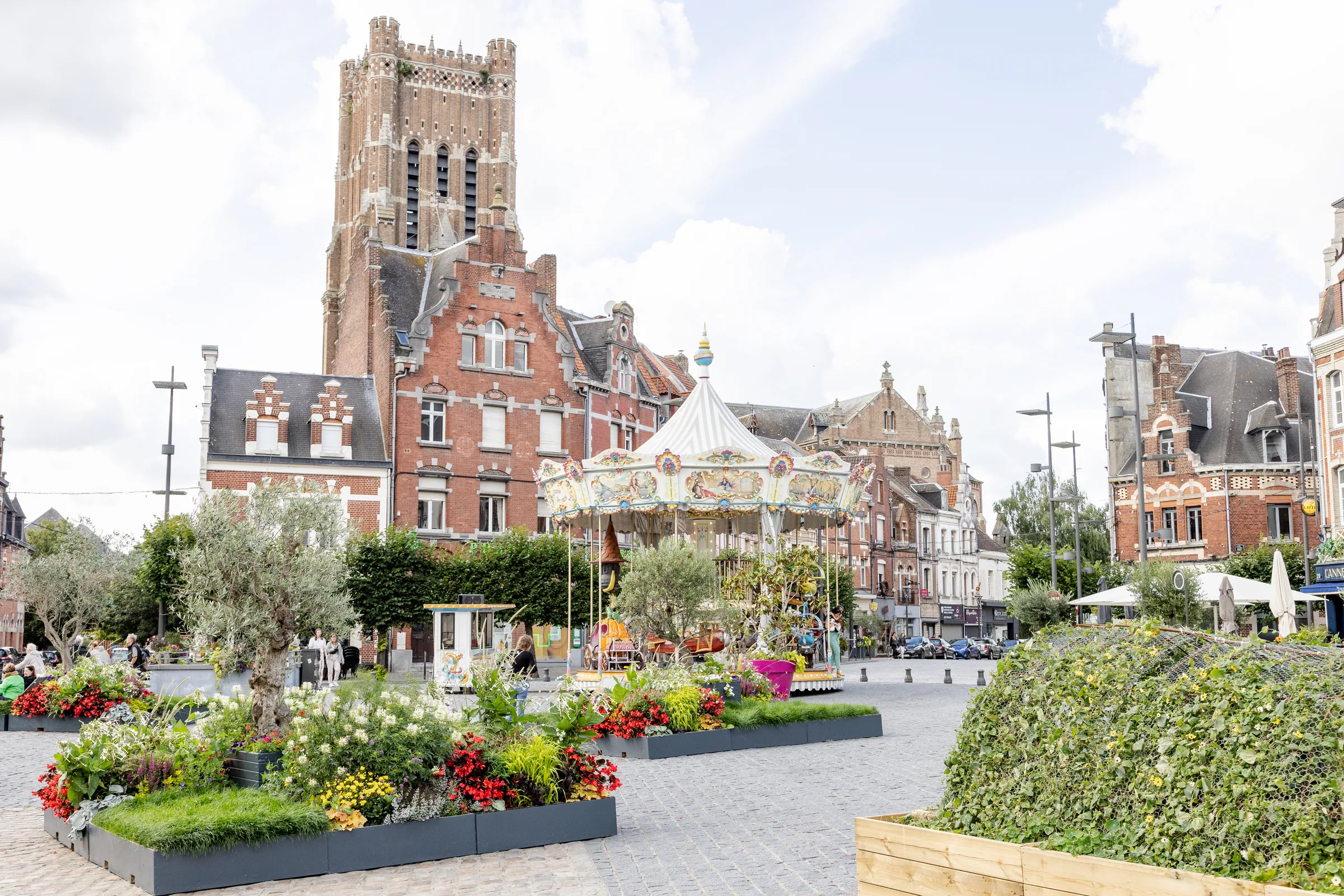
Around the square, the façades rebuilt after the First World War mix Flemish brick and Art Deco details. The town hall, the Saint-Vaast church and the adjacent shopping streets are all walkable. The market fills the square several days a week.
In the evening, the Grand Place lights up. Restaurants, estaminets and brasseries serve the specialities of the North — carbonnade, waffles, local beers. A town on a human scale, without trying to be more.
Arras
28 km · 30 min by car · ~30 min by direct train.
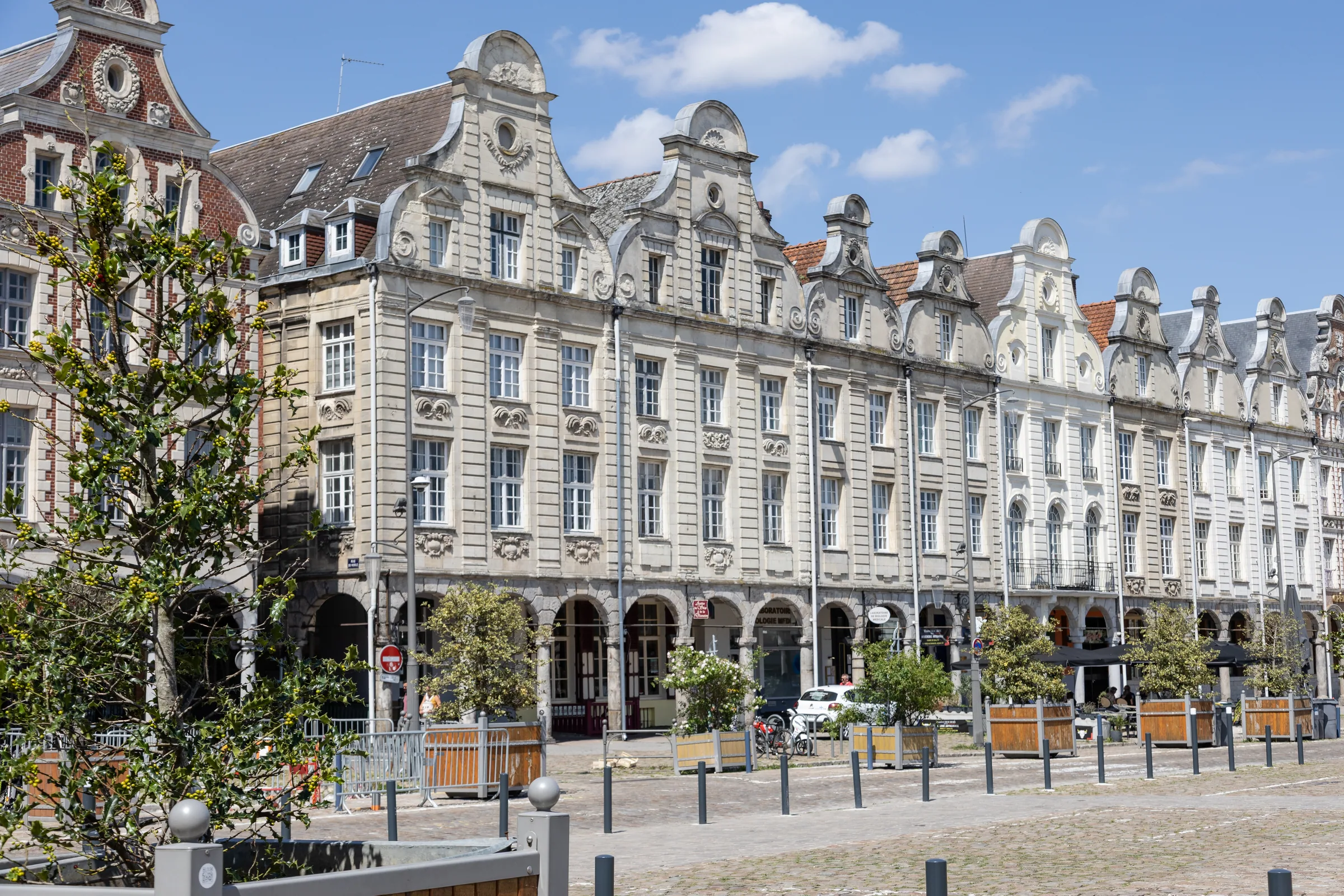
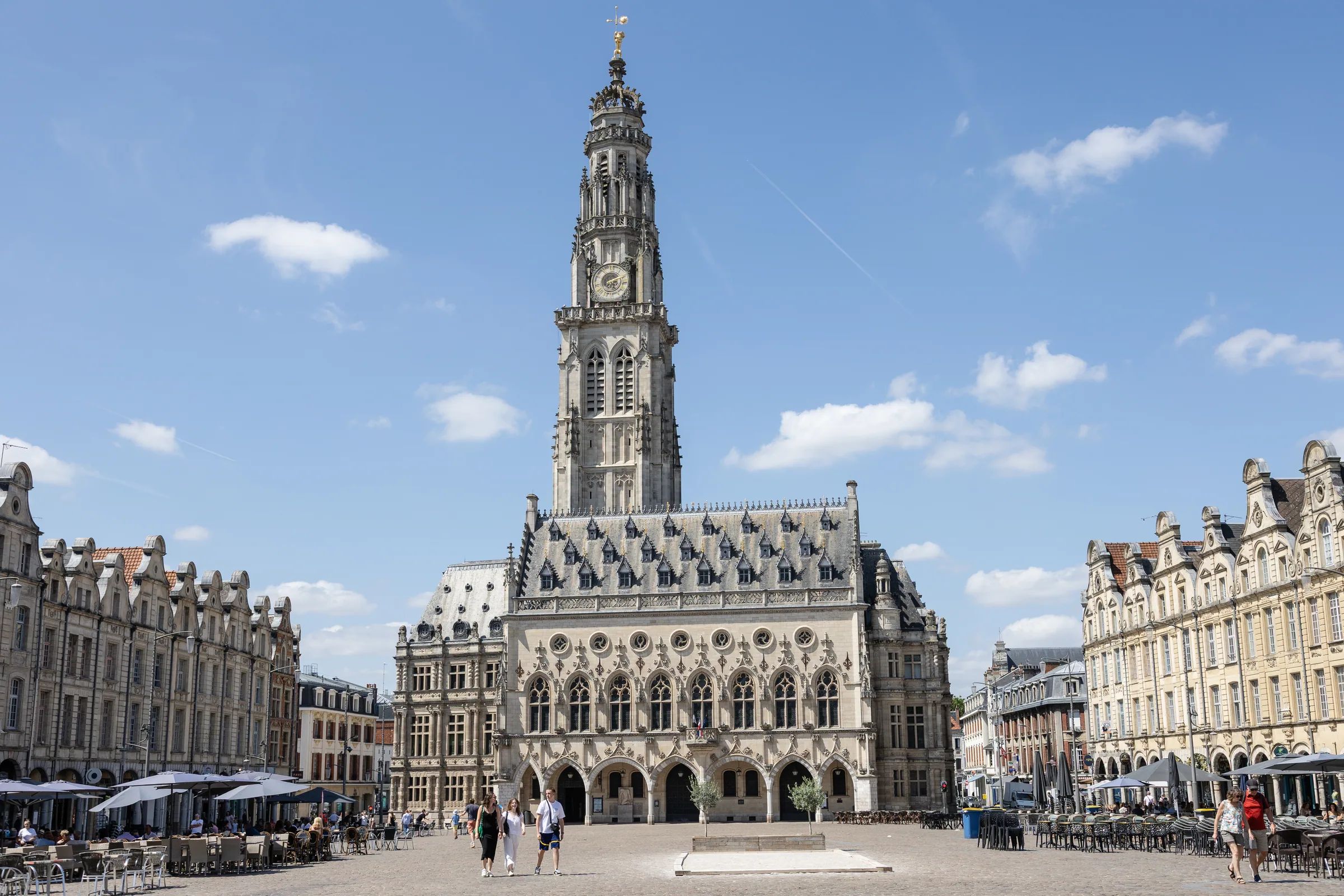
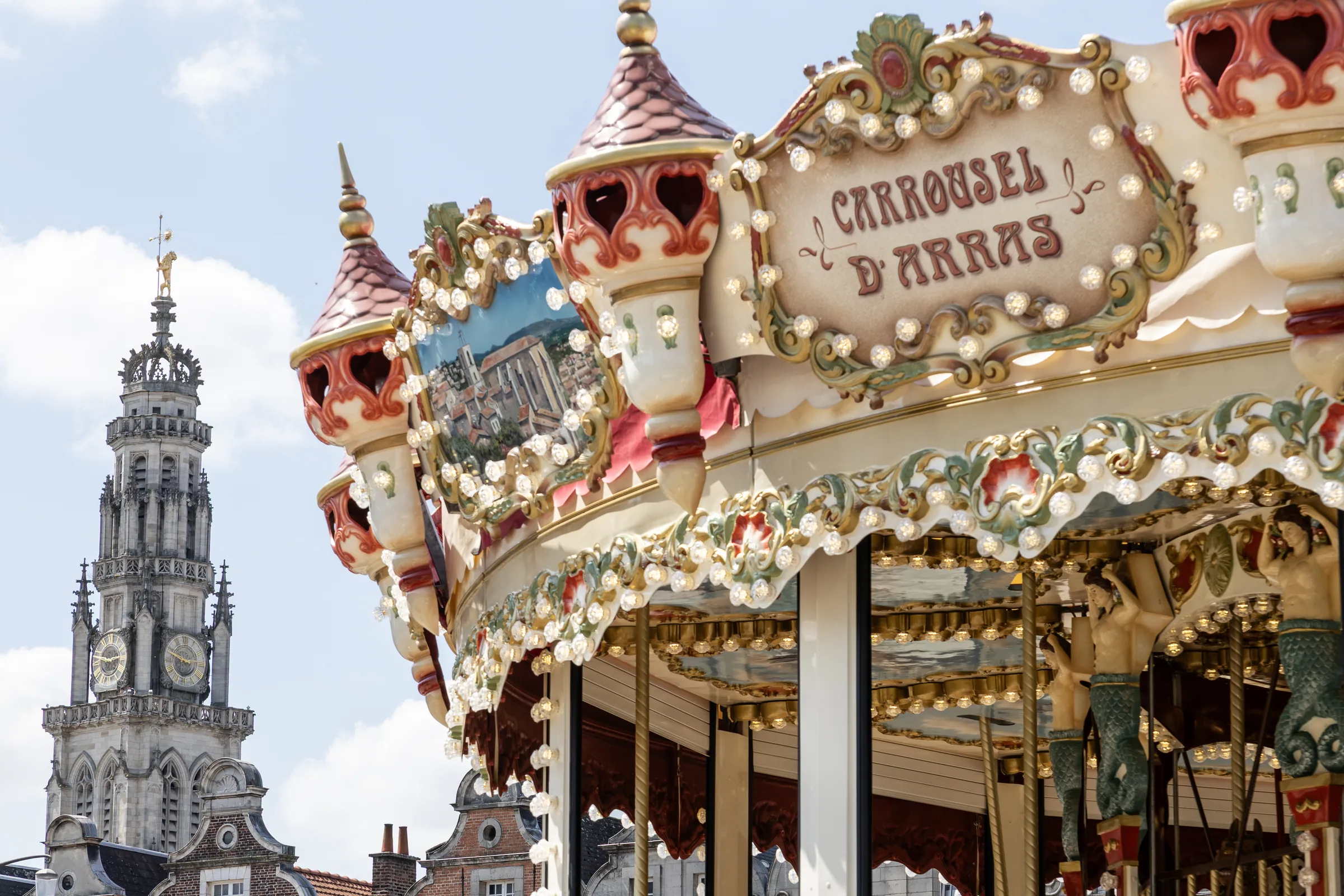
Arras has two great baroque squares lined with 155 gabled façades — a unique ensemble in Europe. The Grand-Place and the Place des Héros form a continuous stage under the arcades, with cafés, markets and restaurants. The UNESCO-listed belfry offers a view over the city and the Artois countryside.
Beneath the squares, the Boves — a network of tunnels dug into the chalk — bear witness to the city's strategic role during the First World War. Vauban's citadel, the Saint-Vaast abbey and the fine-arts museum round out the day.
Arras also holds you by its atmosphere: a lively city, with a renowned Christmas market and tables worth the trip.
Saint-Omer
35 km · 35 min by car · 42 min by direct train.
Saint-Omer is a town of Art and History with a well-preserved old centre. The Notre-Dame cathedral, a 13th-century Gothic building, holds ancient stained glass, a monumental organ and remarkable works. The Hôtel Sandelin and several 18th-century mansions line the streets of the centre.
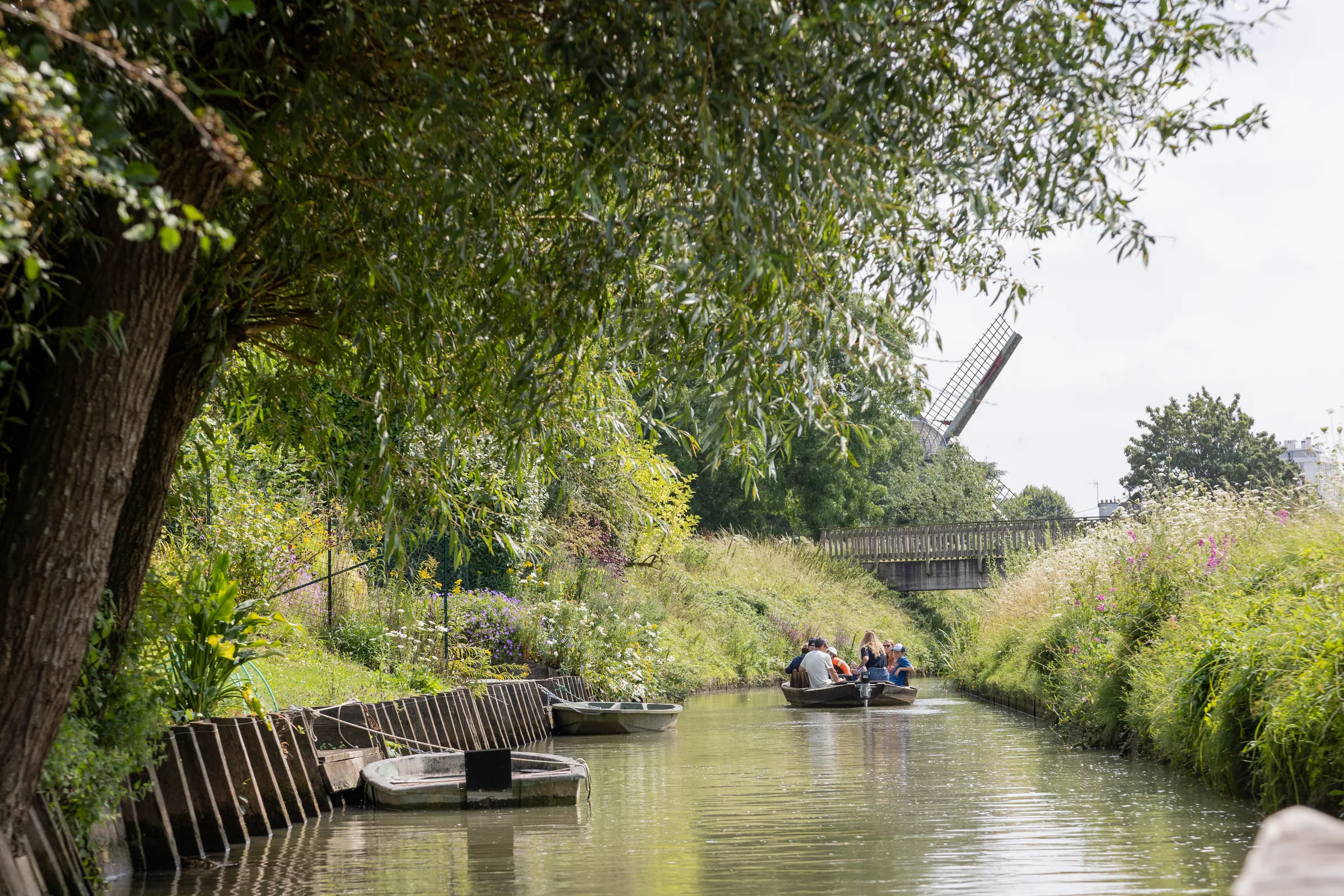
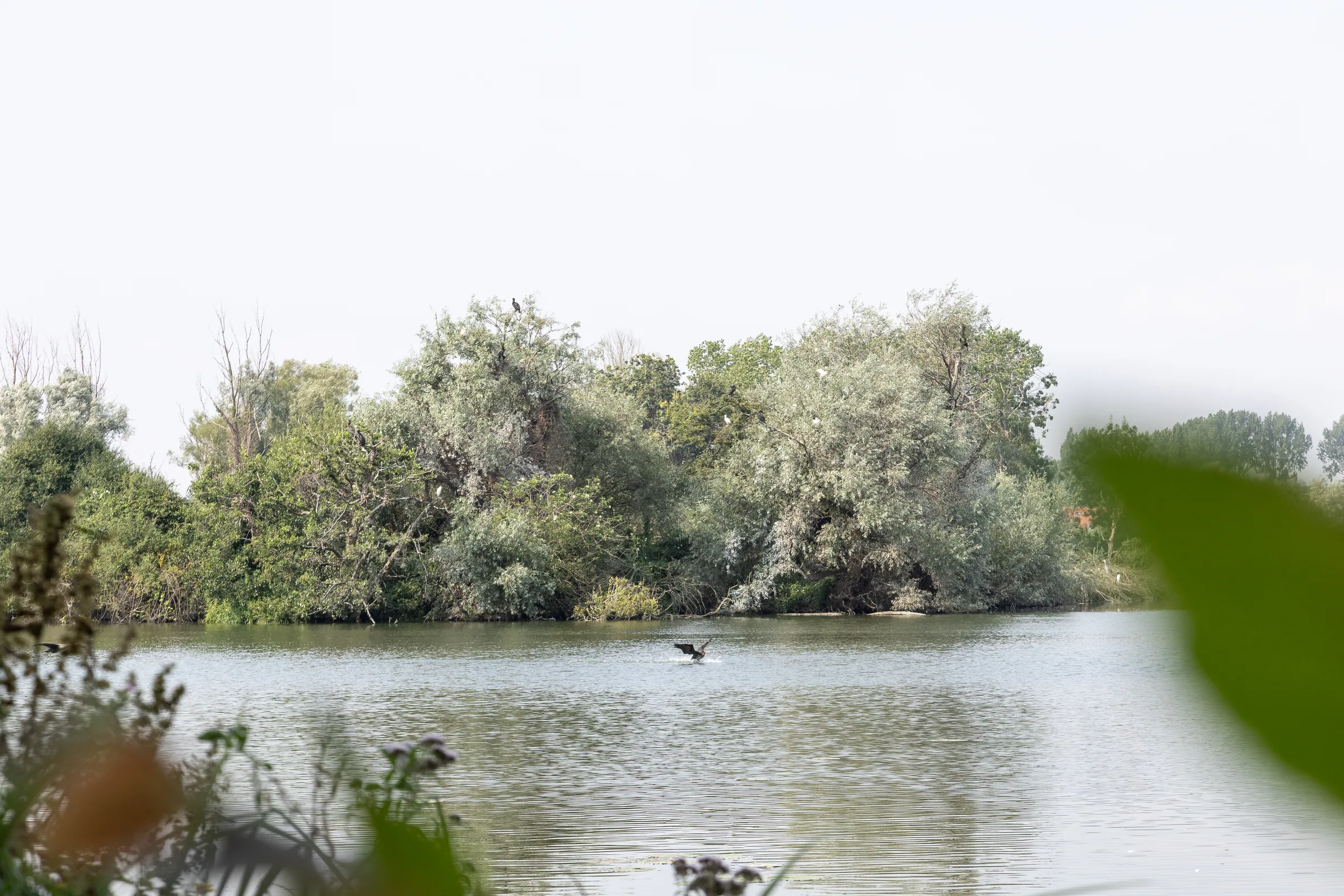
A short walk away, the Audomarois marshes change the scenery entirely: a maze of canals, market gardens and inhabited islets explored by rowing boat or electric boat. The Clairmarais nature reserves and the towpaths are covered on foot or by bike.
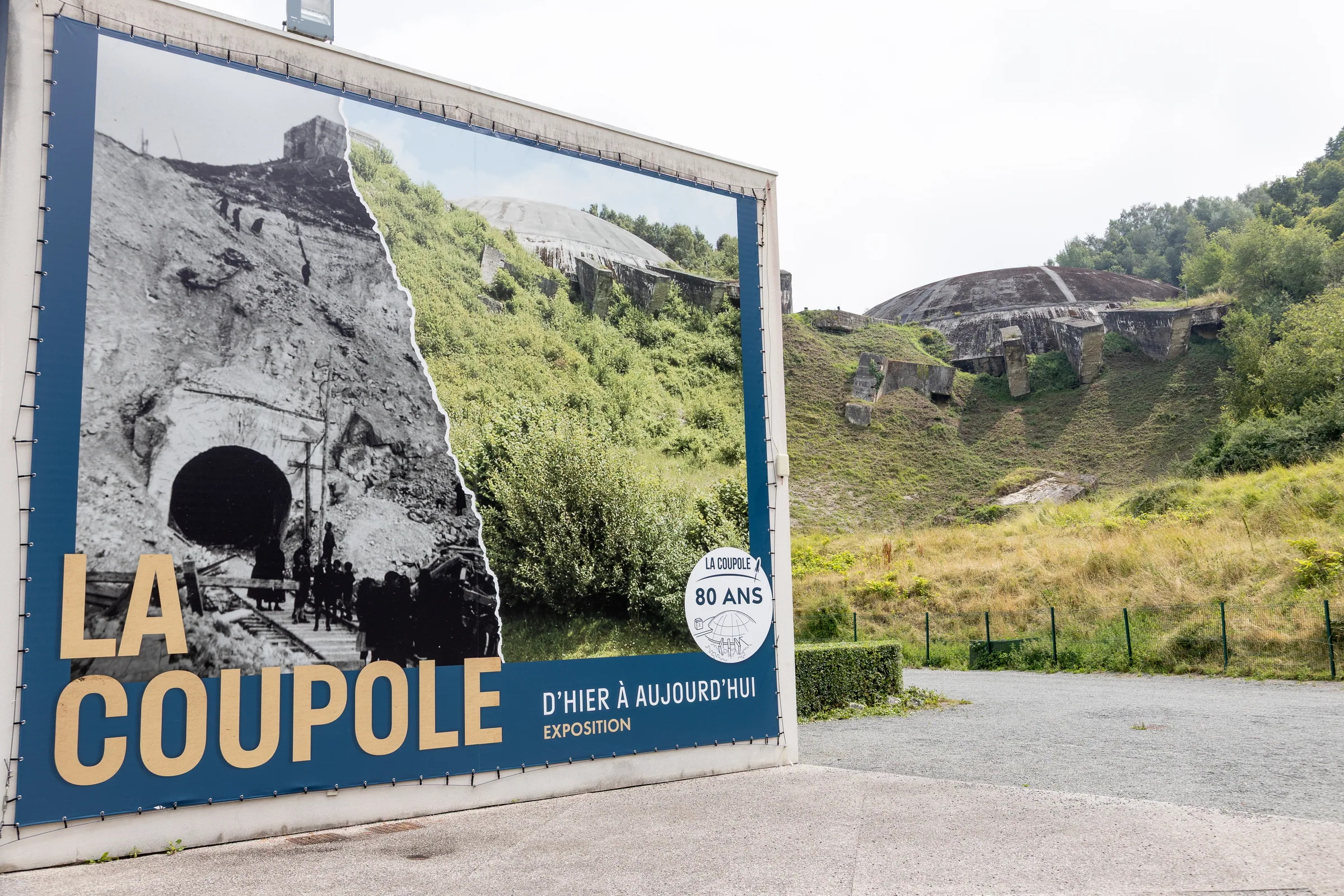
Nearby: La Coupole, a bunker converted into a history centre on the V2 rockets; the Fontinettes boat lift, an industrial relic of the 19th century.
Lille
40 km · 40 min by car · 30 min by direct train.
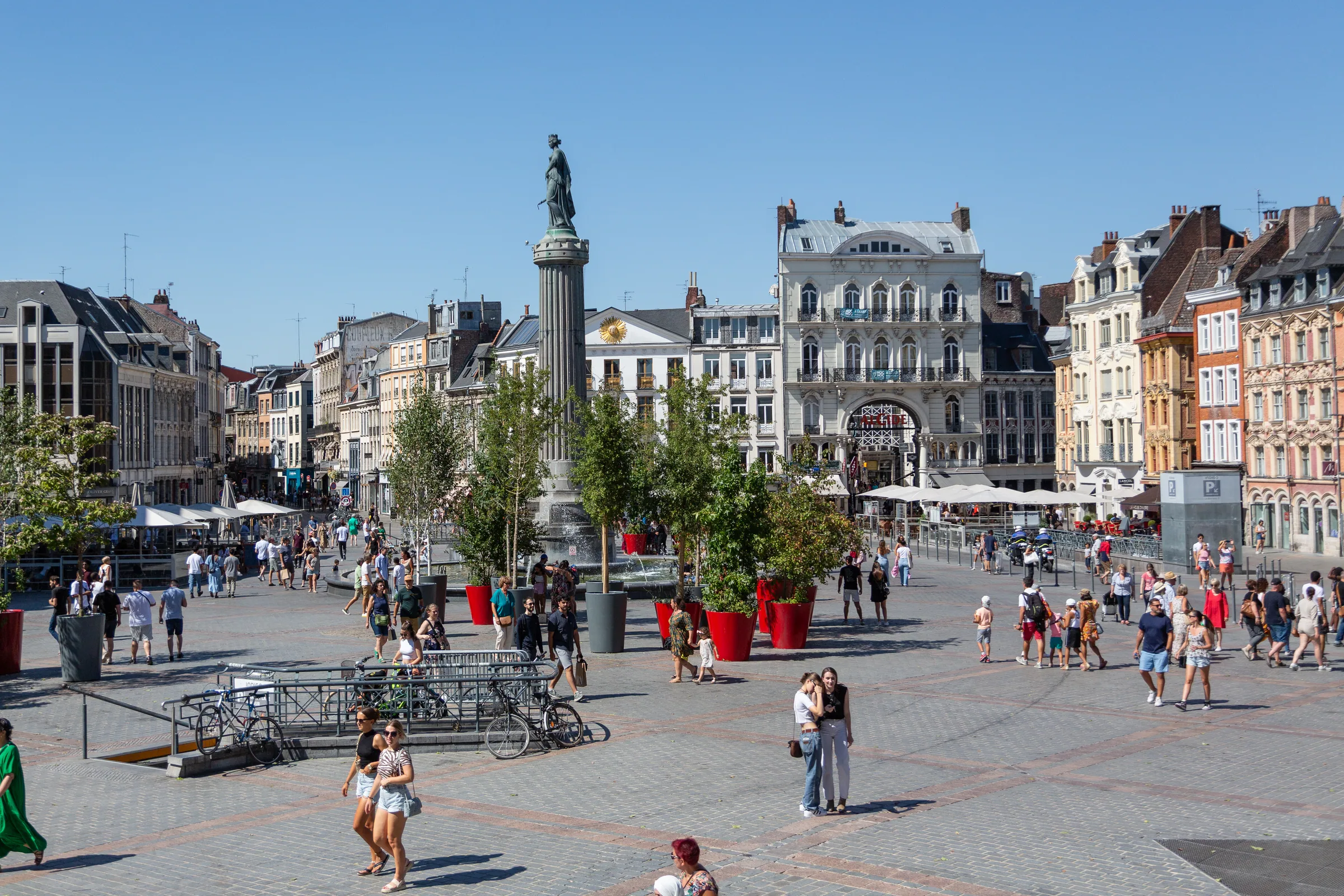
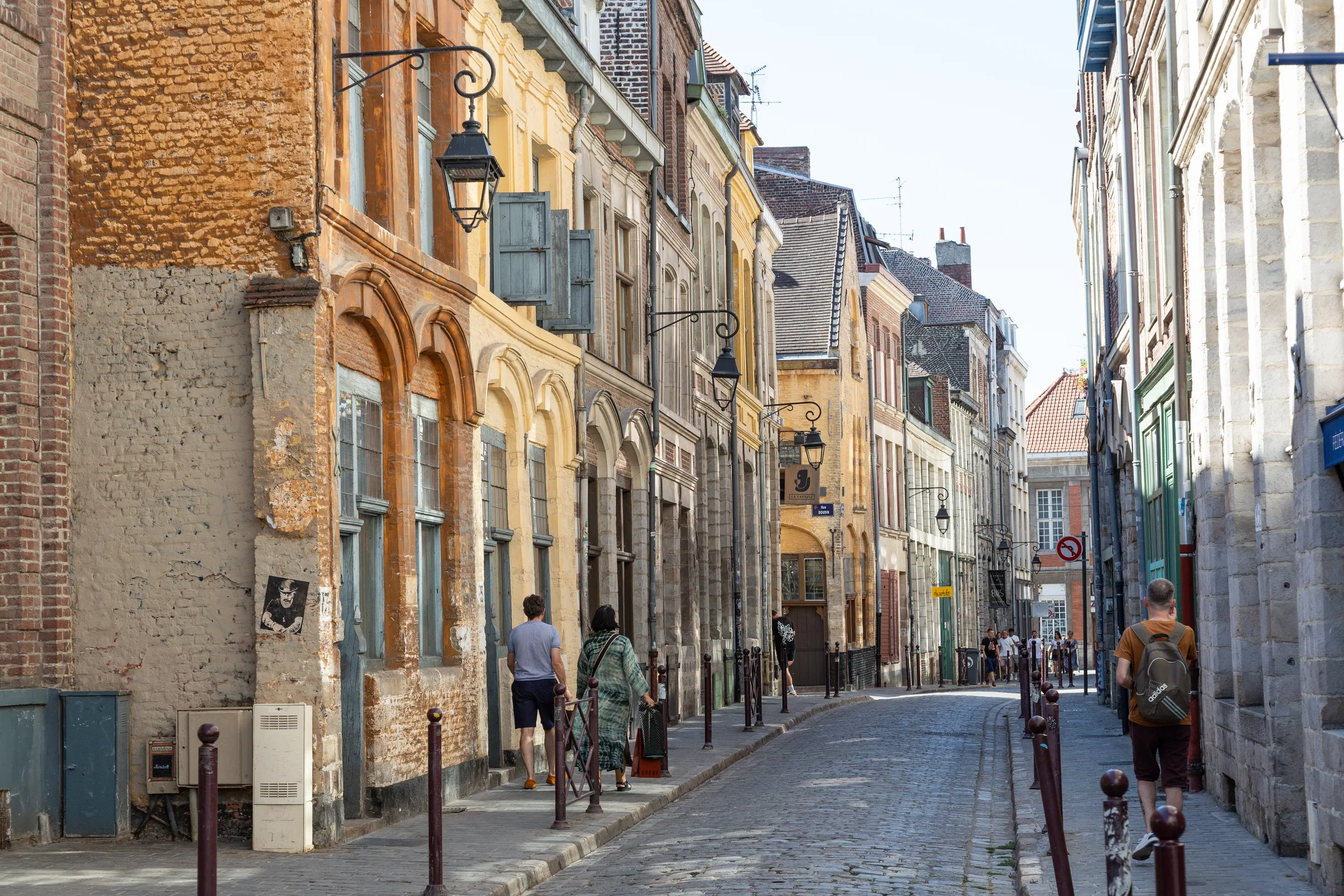
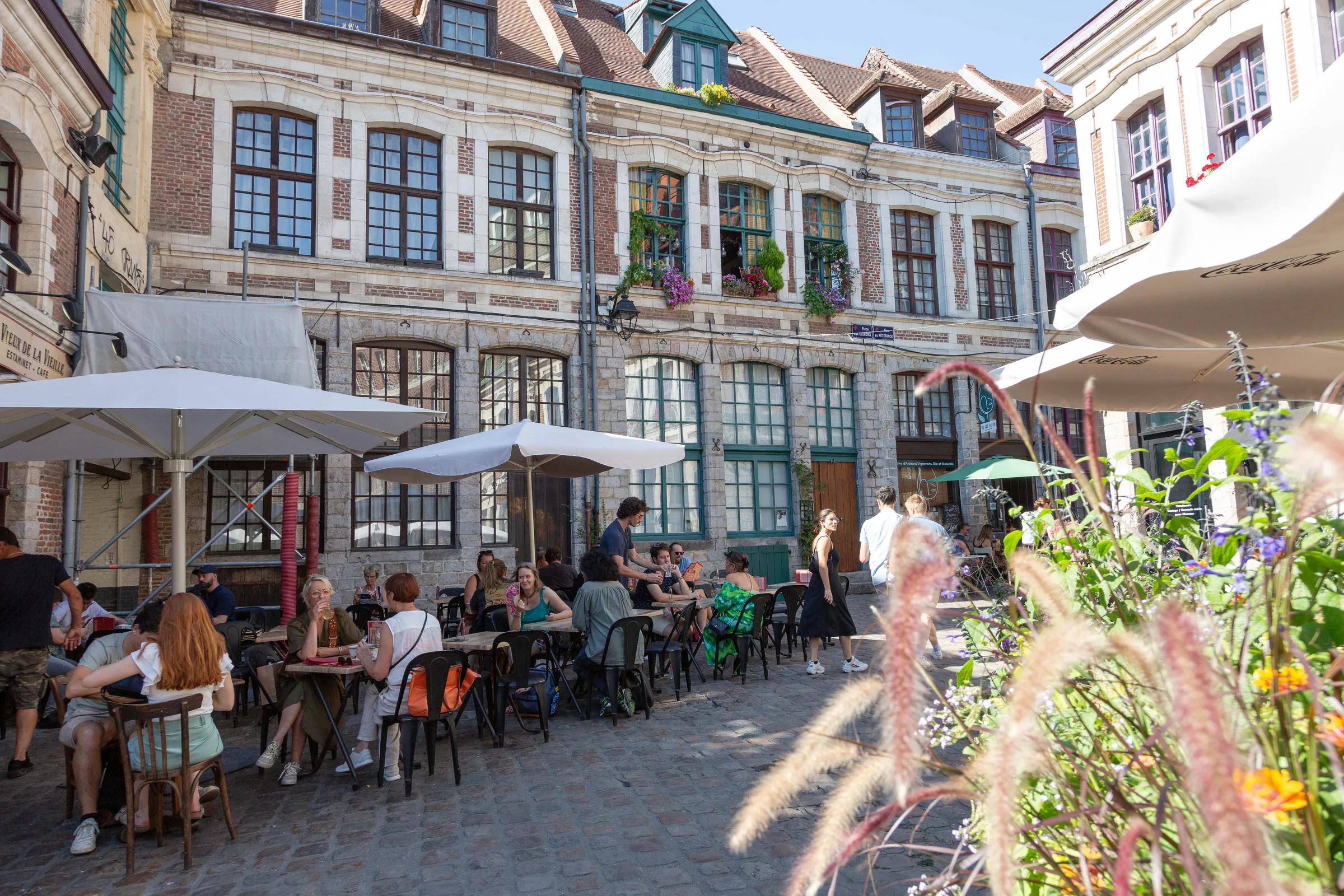
Vieux-Lille concentrates 17th-century Flemish façades, independent shops, estaminets and fine tables within a few streets. The Grand-Place and the Vieille Bourse — with its second-hand booksellers under the arcades — form the historic heart.
The Palais des Beaux-Arts is one of the largest museums in France outside Paris. The Hospice Comtesse, in Vieux-Lille, traces ten centuries of the city's history in a preserved setting. Vauban's citadel and its park are a twenty-minute walk from the centre.
Lille works as a day trip from Béthune: 30 minutes by train, no car, no parking.
Dunkirk
65 km · 55 min by car · 1h by direct train.
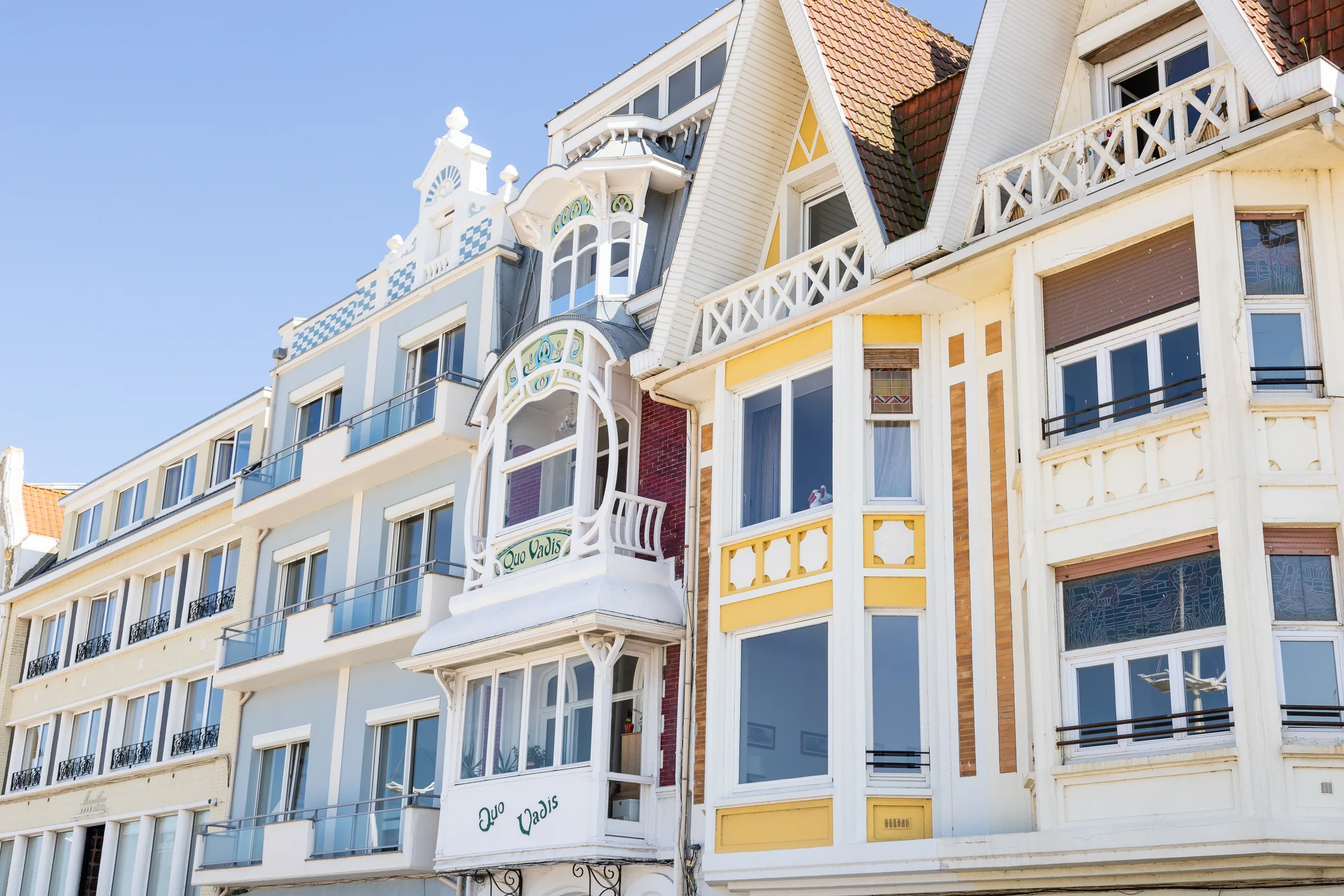
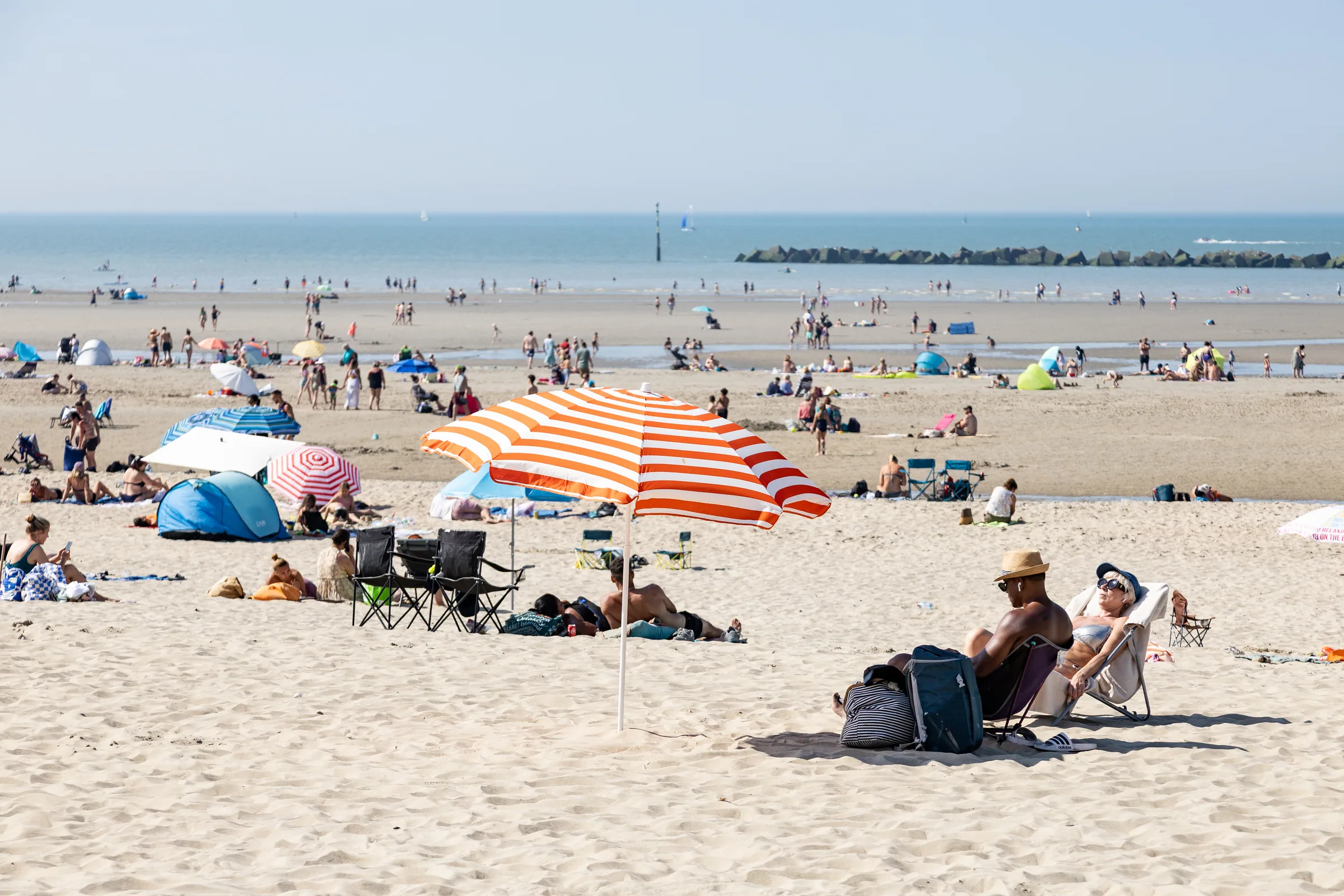
Dunkirk opens onto the North Sea with wide sandy beaches, dunes and a still-active port. The seafront, the cycle paths and the beach huts of Malo-les-Bains make a straightforward setting, without seaside artifice.
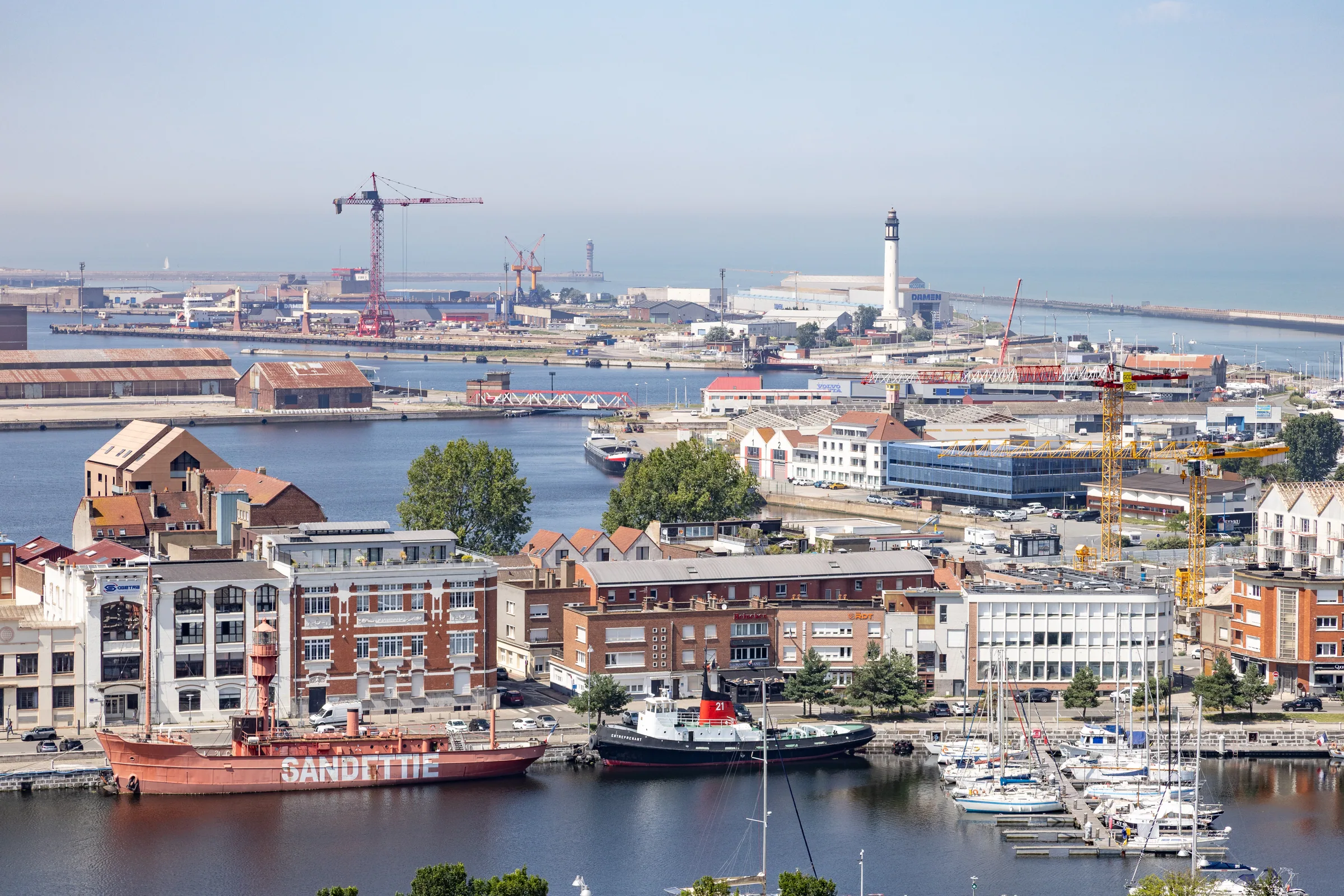
The harbour museum tells the maritime history of the city — privateers, fishermen, wartime convoys. The UNESCO-listed belfry gives a view over the port and the sea. The resorts of Bray-Dunes, towards the Belgian border, offer wilder, quieter beaches.
In winter, Dunkirk lives to the rhythm of its carnival — one of the oldest in France, with its costumed bands, its herring throws and an atmosphere hard to find elsewhere.
Bergues
55 min by car.
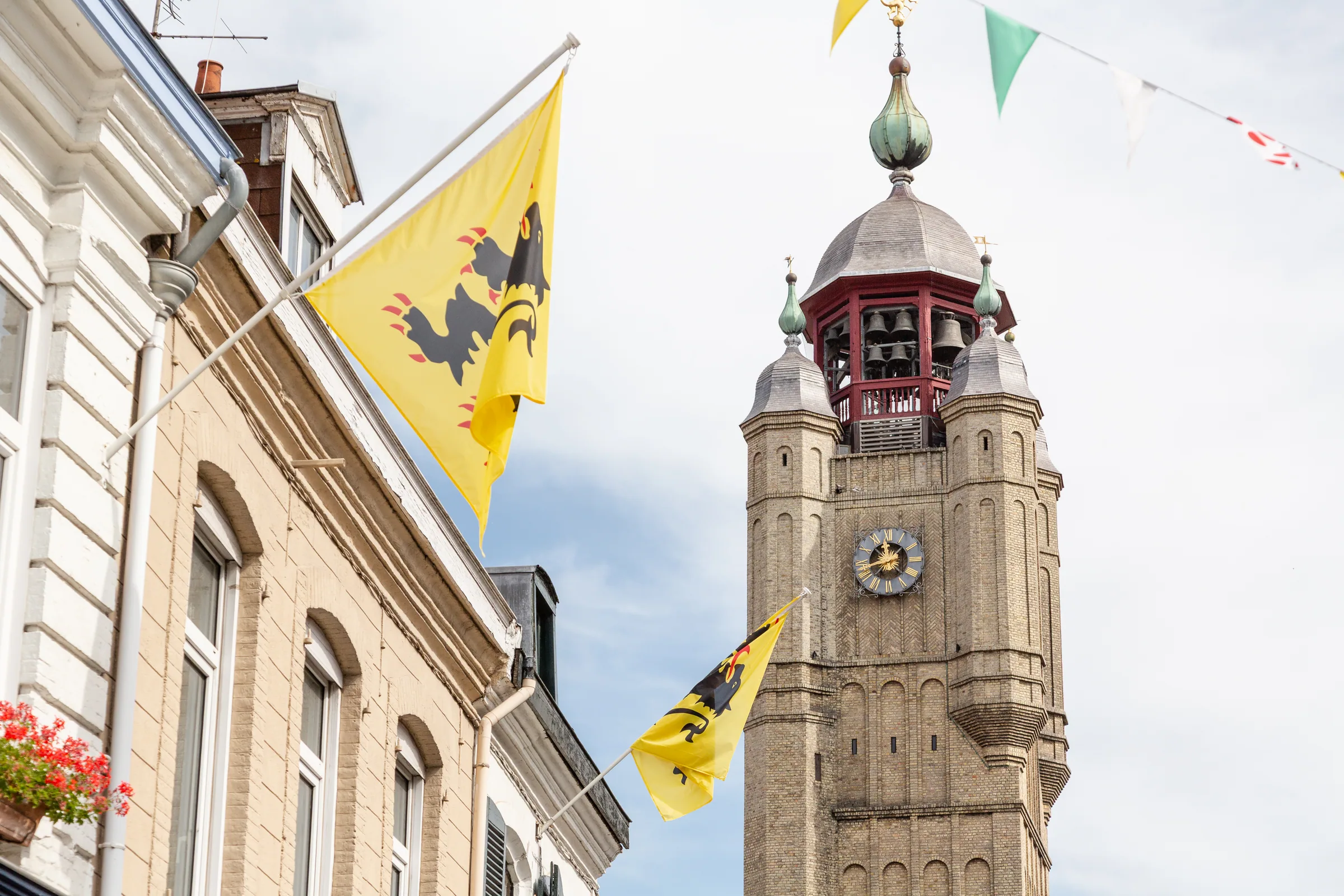
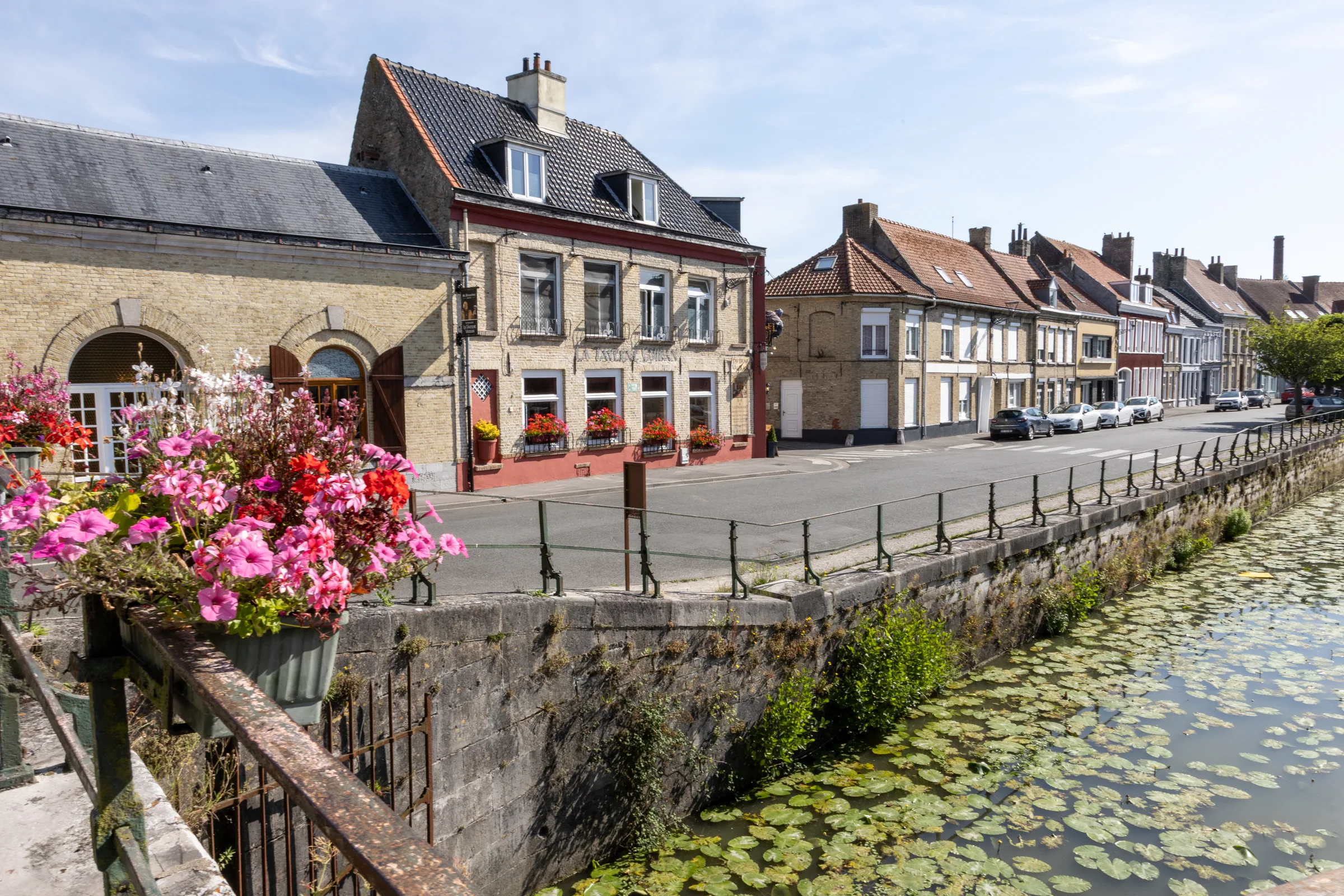
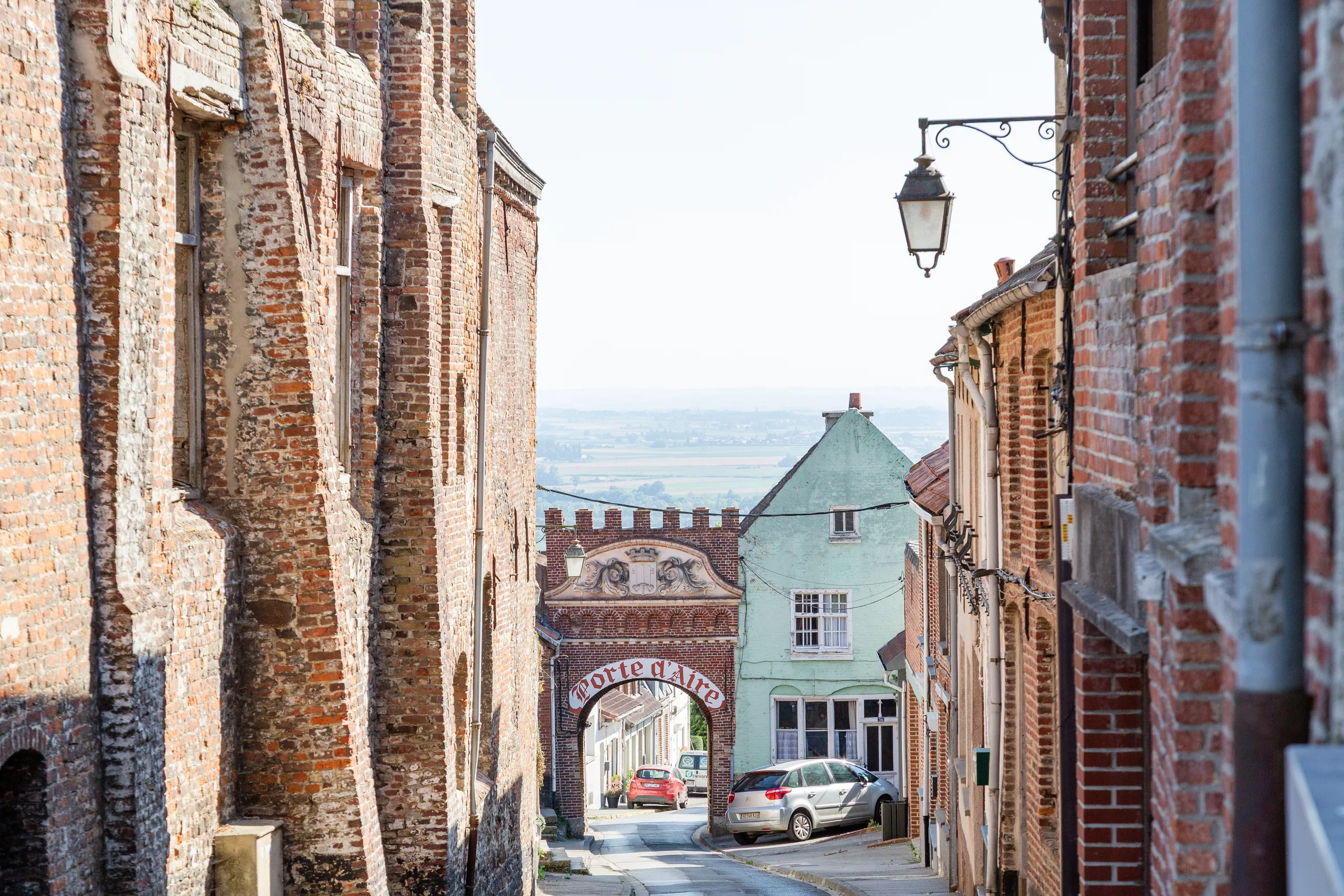
Bergues is a fortified town of French Flanders, ringed by ramparts designed by Vauban and bordered by canals. The belfry, a UNESCO World Heritage site, rings its carillons several times a day at the heart of the market square.
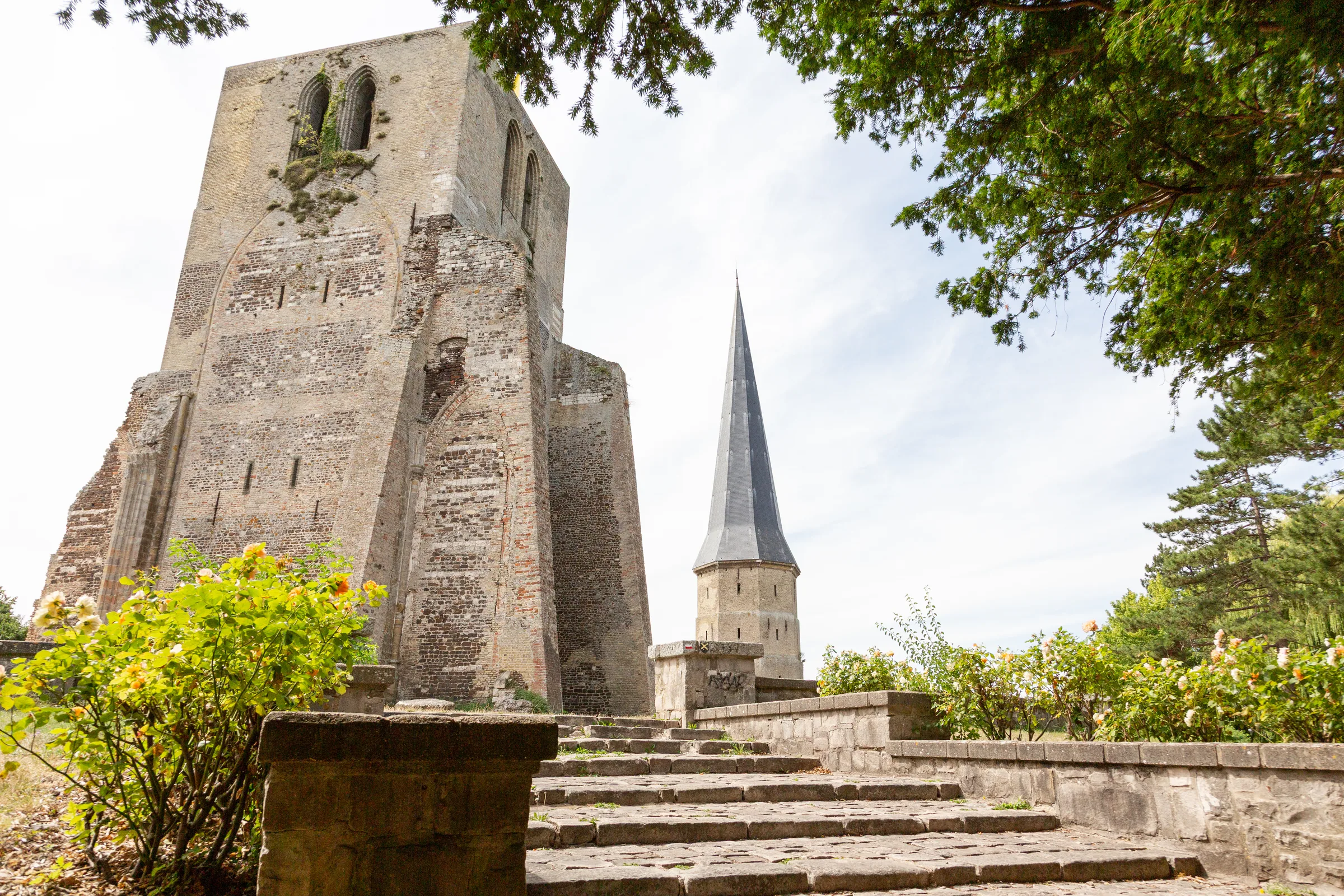
The Mont-de-Piété museum, housed in a former Flemish mansion, holds collections of paintings and liturgical objects. The former Saint-Winoc abbey and its two surviving towers — the Square Tower and the Pointed Tower — overlook the town.
Since the film « Bienvenue chez les Ch'tis », Bergues has gained fame without losing any of its character. The Monday-morning market, the Flemish estaminets and the Lion of Flanders flags on the façades make it an authentic stop.
Inland Flanders
40 min to 1h by car.
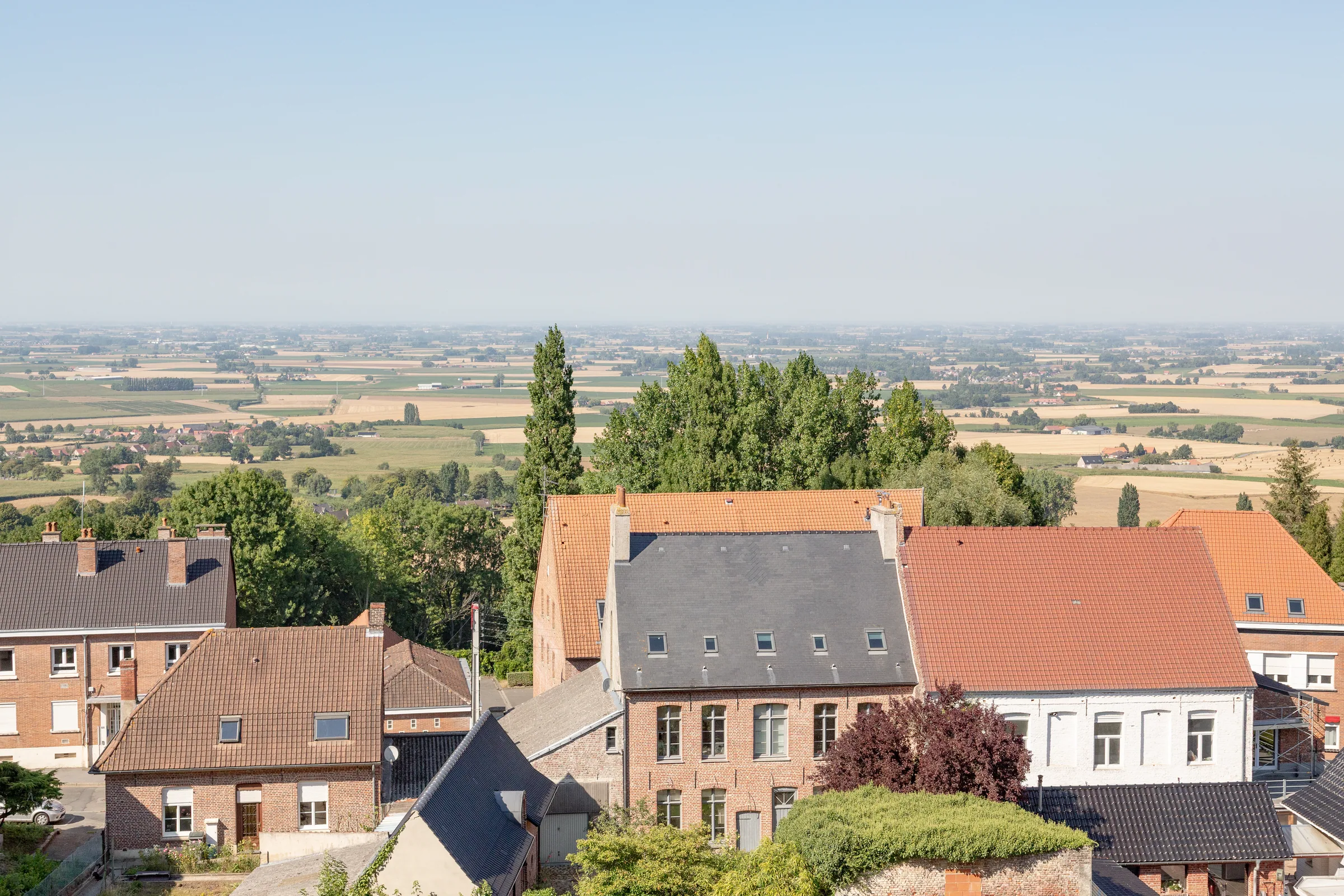
Cassel is one of France's most beautiful villages, perched on a hill rising to 176 metres — a natural belvedere over the whole Flemish plain. The orientation table, the mill and the statue of Marshal Foch dominate the panorama. The old centre lines up Flemish façades, estaminets and brasseries.
All around, the Flanders hills — Mont Noir, Mont des Cats, Mont Kemmel — form a discreet but distinct relief, crossed by hiking trails. The villages of the Houtland keep their brick architecture, their estaminets and their craft breweries.
A quiet territory, easy to read in a day — Flemish architecture, local beers, open landscapes. Bailleul, Steenvoorde and Hondschoote complete the route.
Belgium — Bruges
~1h30 by car via Lille.
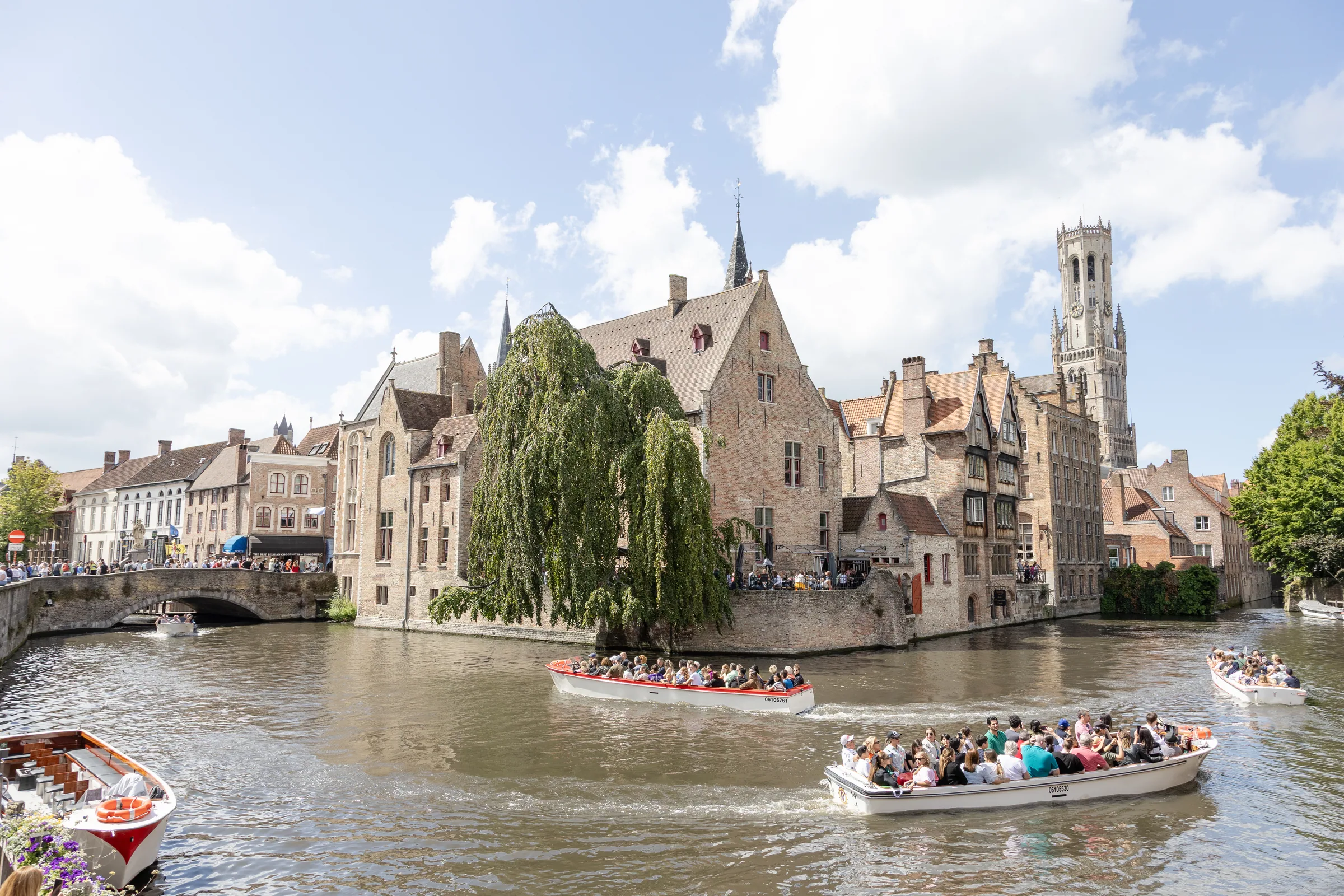
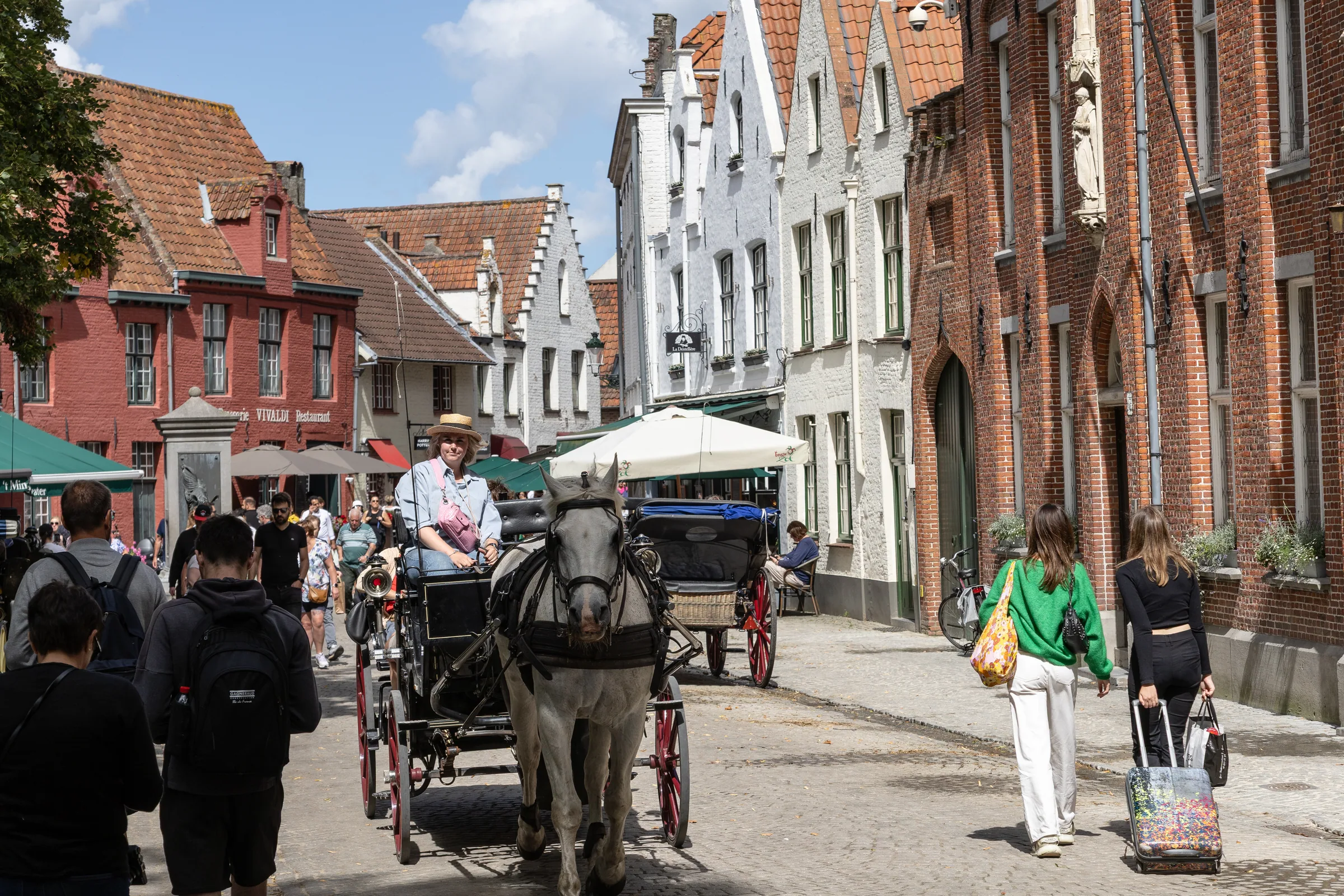
Bruges is one of the best-preserved cities in Europe. Its historic centre, a UNESCO World Heritage site, is organised around canals that earned the city its nickname of « Venice of the North ». The belfry, the Markt and the Burg square form the medieval heart.
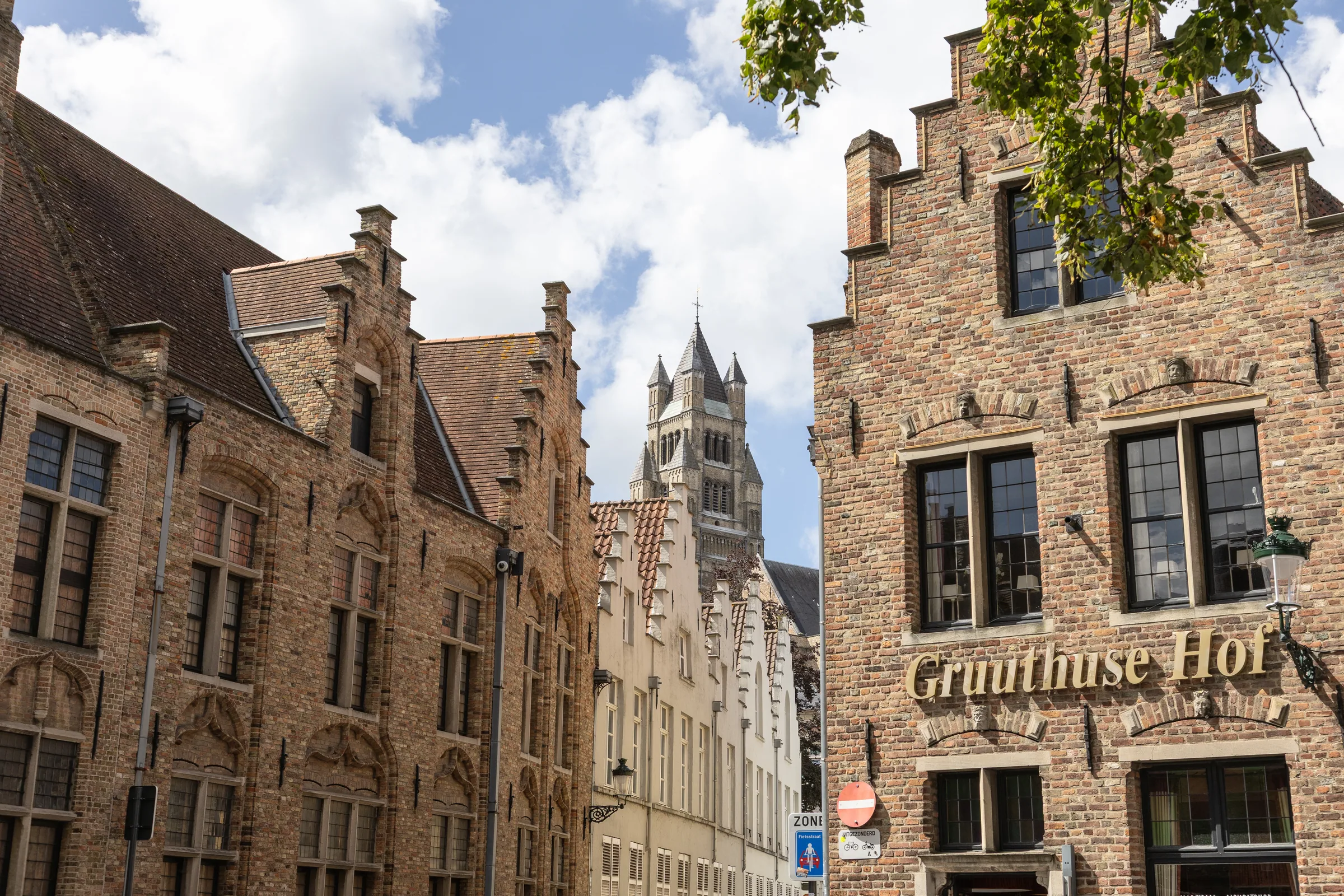
The stepped-gable Flemish brick façades, the courtyards of the Beguinage, the Groeninge museum with its Memling, or the Basilica of the Holy Blood concentrate several centuries of history within a few streets. Boat trips on the canals are the best way to grasp the scale of the city.
Bruges works as a day trip from the Loft, by car via the A25 and E40, or by train via Lille. To stay longer, Ghent and Antwerp are within reach — the Belgian border opens up whole days without complicated logistics.
A central base in Béthune. The Hauts-de-France at your own pace.